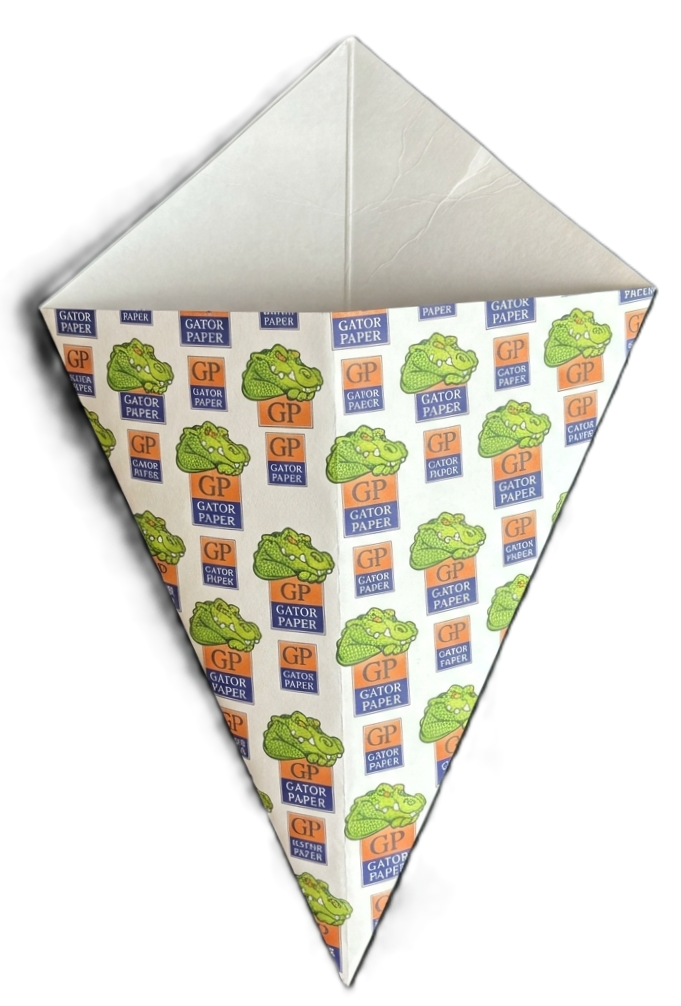
Belgium
Cornet de frites
Pronounced: kor-NAY duh FREET
Also called puntzak or frietzak.
The Fry Cone Guide
In America, fries usually arrive in a carton, basket, or paper bag. Head to places like Belgium or the Netherlands and the cone starts looking a lot less unusual.

Fry cones have been part of European street-food culture for generations. They're easy to carry, easy to eat from while walking, and the tall tapered shape keeps everything together without needing a tray.
It's one of those packaging ideas that feels oddly unfamiliar in America despite being completely normal somewhere else.
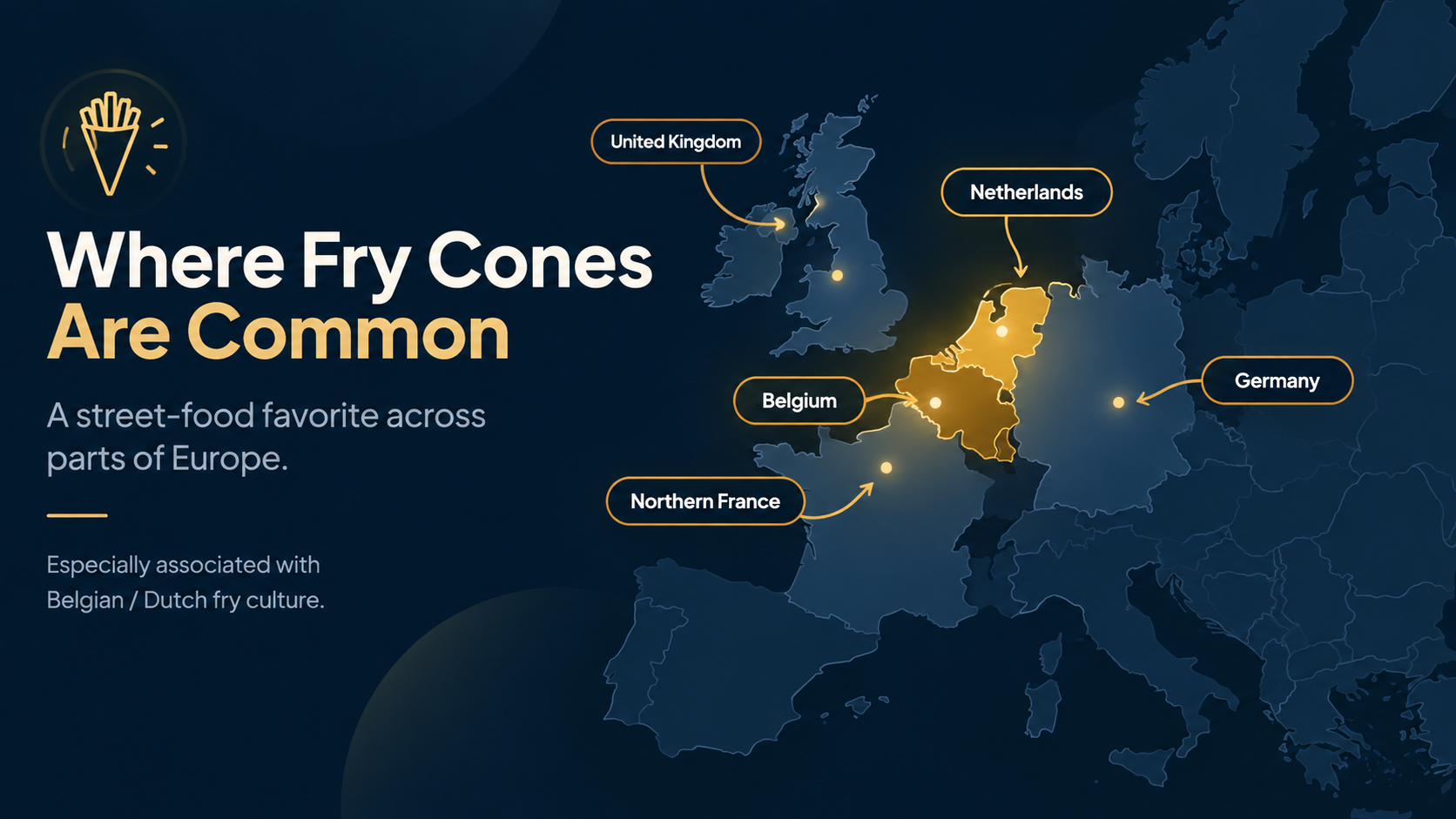
International Terminology
The fry cone has picked up a few names on its travels.
Belgium
Pronounced: kor-NAY duh FREET
Also called puntzak or frietzak.
Netherlands
Pronounced: PUHNT-zahk
Literally a pointed paper bag, which is a pretty accurate description.
Germany
Pronounced: FRIT-en-TOO-tuh
A German name for the classic fries bag/cone.
Spain
Pronounced: koo-koo-ROO-cho deh pah-TAH-tahs FREE-tahs
A paper cone filled with fries.
Built Around the Cone
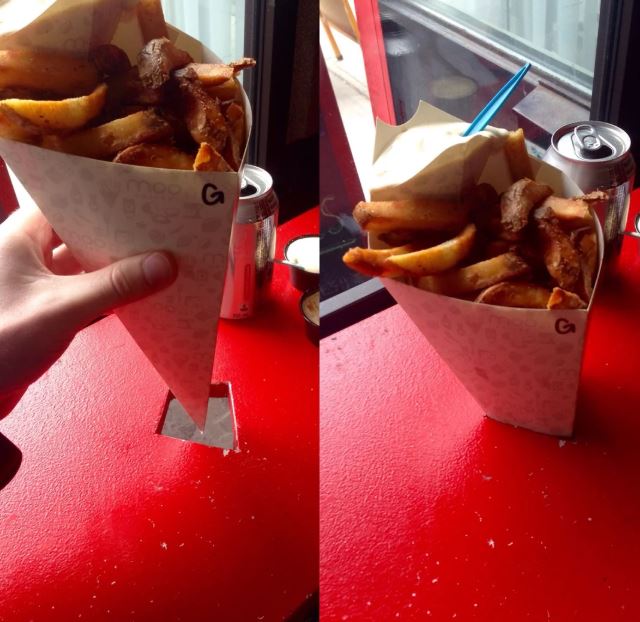
Some restaurants take the idea even further by building a diamond-shaped opening directly into the tabletop. The cone drops in, the table holds it upright, and suddenly the package is acting like a bowl, holder, and tray all at once.
It's ridiculously simple - which is probably why it works so well.
Yes, people really build tables around the fry cone.
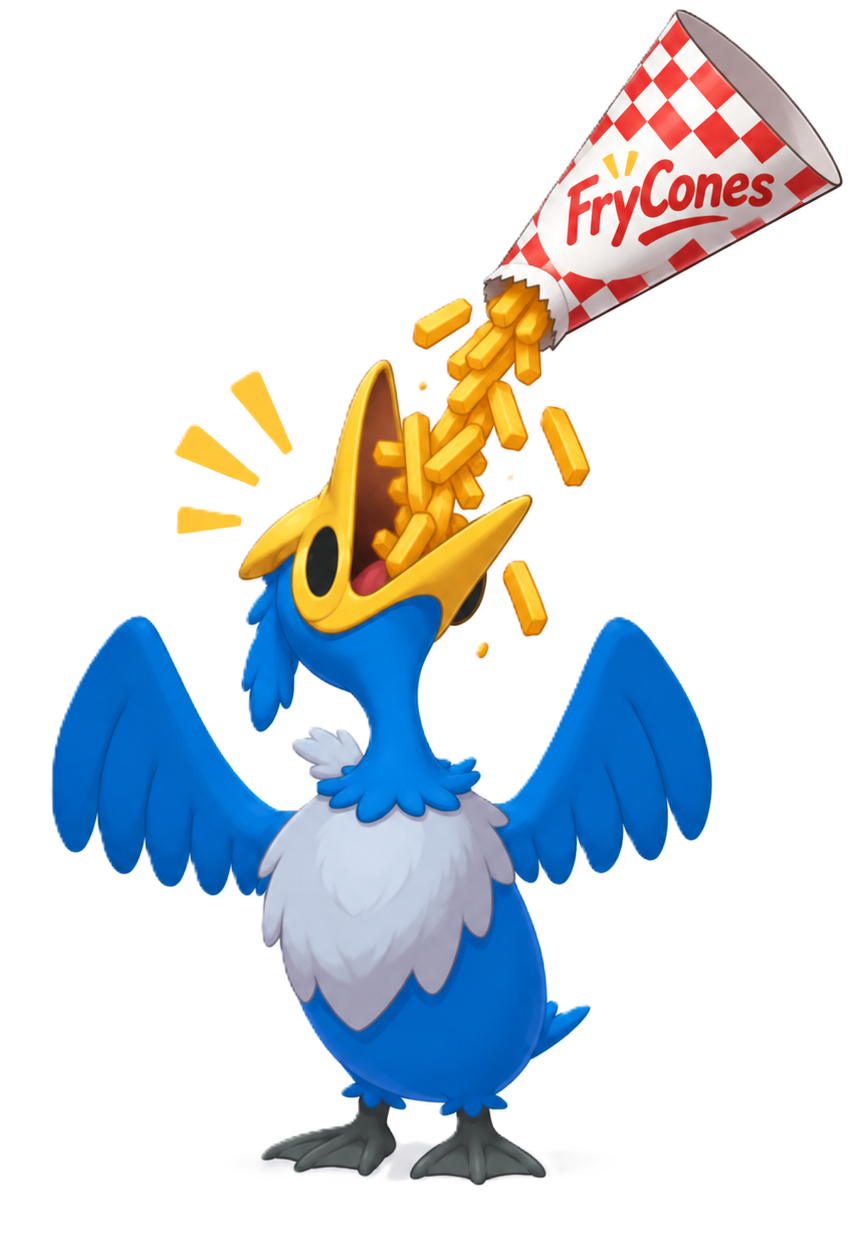
Of course, the internet came up with another solution.
“You can cut the bottom of that cone and just funnel the fries down your gullet like you were a foie gras farm goose.”
We cannot officially recommend this serving method.
Simple Shape, Real Utility
The wide opening makes fries and toppings easy to reach. The tapered bottom gives customers a natural one-handed grip. The tall outside wall creates a clean branding surface without turning the package into a box.
Sometimes good packaging really is just a weirdly shaped piece of paper that happens to make perfect sense.